

Interview Preparation
Interview Preparation Guide: 25 Practical Tips to Crack Your Next Interview
Everything You Need to Prepare for HR, Technical and Virtual Interviews in India
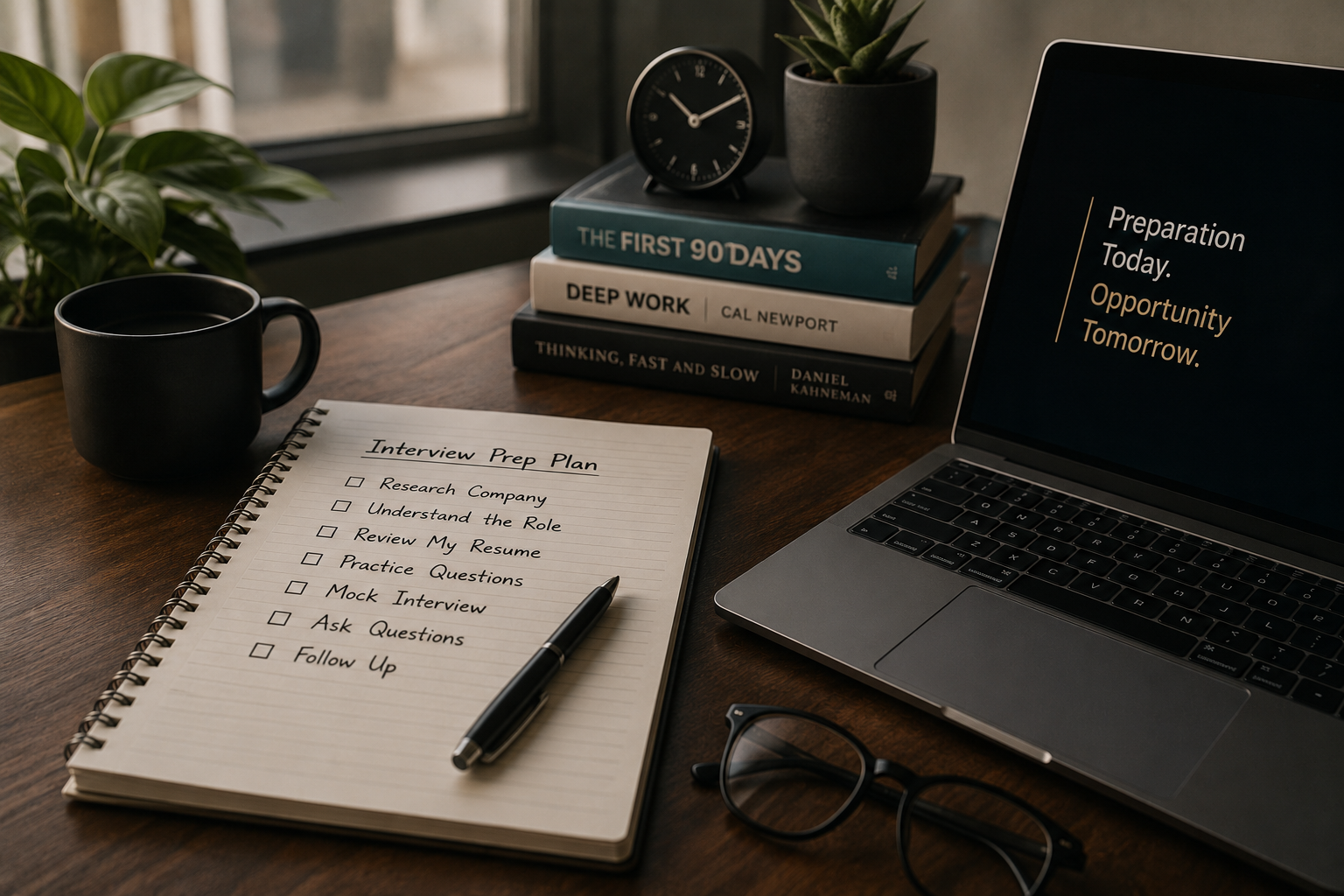
Interview Preparation Guide: 25 Practical Tips to Crack Your Next Interview
A good interview is rarely won by the smartest candidate in the room. More often, it is won by the candidate who understands the company, communicates clearly, and demonstrates how they can solve problems.
Whether you are preparing for your first interview or your next career move, preparation matters far more than memorizing answers.
This guide covers everything you need to know, from researching companies and answering interview questions to preparing for virtual interviews and following up after the conversation.
If you are actively exploring new opportunities, start by browsing the latest openings on VHire Jobs. Reviewing real job descriptions is one of the fastest ways to understand what employers are looking for before you begin your preparation.
Interview Preparation Checklist
Before every interview, make sure you have completed these essentials.
✔ Understand the job description
✔ Research the company
✔ Review your resume
✔ Practice common HR questions
✔ Prepare for technical or role specific questions
✔ Plan your interview outfit
✔ Test your internet and camera for virtual interviews
✔ Prepare questions for the interviewer
✔ Carry all required documents
✔ Follow up after the interview
Think of this as your final pre interview checklist rather than something to complete the night before.
Step 1: Understand the Job Description
Most candidates read a job description once before applying and never revisit it.
That is a mistake.
Read it again before every interview and identify:
Required skills
Preferred skills
Daily responsibilities
Business problems the role is expected to solve
Every answer you give should connect back to these expectations.
Step 2: Research the Company Like an Insider
Interviewers expect candidates to know more than the company’s homepage.
Spend time understanding:
Products and services
Customers
Leadership team
Recent announcements
Company culture
Competitors
This research helps you answer questions with context instead of generic responses.
Step 3: Know Your Resume Better Than Anyone Else
Everything on your resume is fair game.
Be prepared to explain:
Projects
Career gaps
Achievements
Technical skills
Certifications
Job changes
If you cannot confidently explain something you listed, remove it before applying.
Step 4: Prepare for HR Interview Questions
Most HR interviews explore communication, motivation, and decision making.
Prepare structured answers for questions such as:
Tell me about yourself
Why do you want this role
Why are you leaving your current job
What are your strengths
What is your biggest weakness
Describe a difficult situation you handled
Keep answers specific.
Real experiences are always stronger than rehearsed statements.
Step 5: Prepare for Technical Interviews
Technical interviews measure how you think as much as what you know.
Depending on your role, revise:
Core concepts
Problem solving
System design
Case studies
Coding exercises
Portfolio projects
If you struggle with a question, explain your thinking instead of staying silent.
Interviewers often evaluate your approach more than the final answer.
Step 6: Use the STAR Framework for Behavioural Questions
When discussing past experiences, structure your answers using:
Situation
Task
Action
Result
This keeps answers concise while showing ownership and measurable impact.
Step 7: Practice With Mock Interviews
Confidence comes from repetition.
Practice with:
Friends
Mentors
Industry professionals
Online mock interview platforms
Record yourself occasionally.
Most candidates are surprised by their filler words, posture and speaking speed.
Common Interview Mistakes
Many qualified candidates lose opportunities because of avoidable mistakes.
Some of the most common include:
Giving generic answers
Interrupting interviewers
Speaking negatively about previous employers
Not asking questions
Arriving unprepared
Ignoring company research
Memorizing answers word for word
Preparation should improve confidence, not make your responses sound scripted.
Virtual Interview Tips
Remote interviews are now part of almost every hiring process.
Before joining:
Test your internet
Check your microphone
Use a clean background
Keep your camera at eye level
Silence notifications
Join five minutes early
Small details create a professional first impression.
Questions You Should Ask the Interviewer
Interviews are conversations.
Good questions include:
What does success look like in this role?
What challenges is the team currently solving?
What qualities do your highest performers share?
What does the onboarding process look like?
Thoughtful questions demonstrate genuine interest and preparation.
What to Do After the Interview
Preparation does not end when the meeting finishes.
Within twenty four hours:
Send a thank you email
Reflect on difficult questions
Note areas for improvement
Continue applying for other opportunities
Avoid waiting for a single company before continuing your job search.
How VHire Can Help
Finding the right opportunity is only one part of getting hired.
The other part is preparing well enough to earn it.
The VHire Blog regularly publishes practical career advice, interview strategies, hiring insights, resume tips and industry updates to help candidates improve with every application.
Alongside these resources, VHire Jobs connects professionals with opportunities across industries, making it easier to discover roles that match your skills and career goals.
Whether you are entering the workforce, switching careers or aiming for your next promotion, combining consistent preparation with the right opportunities gives you the best chance of success.
Conclusion
Every successful interview begins long before you meet the interviewer.
Understanding the role, researching the company, refining your communication, and practicing real interview scenarios will always outperform last minute preparation.
Treat every interview as an opportunity to improve. The experience you gain from each conversation strengthens your confidence and brings you one step closer to the right role.