

Hiring & Recruiting
AI Hiring in 2026: What Recruiters Need to Know About Privacy, Transparency and Human Oversight
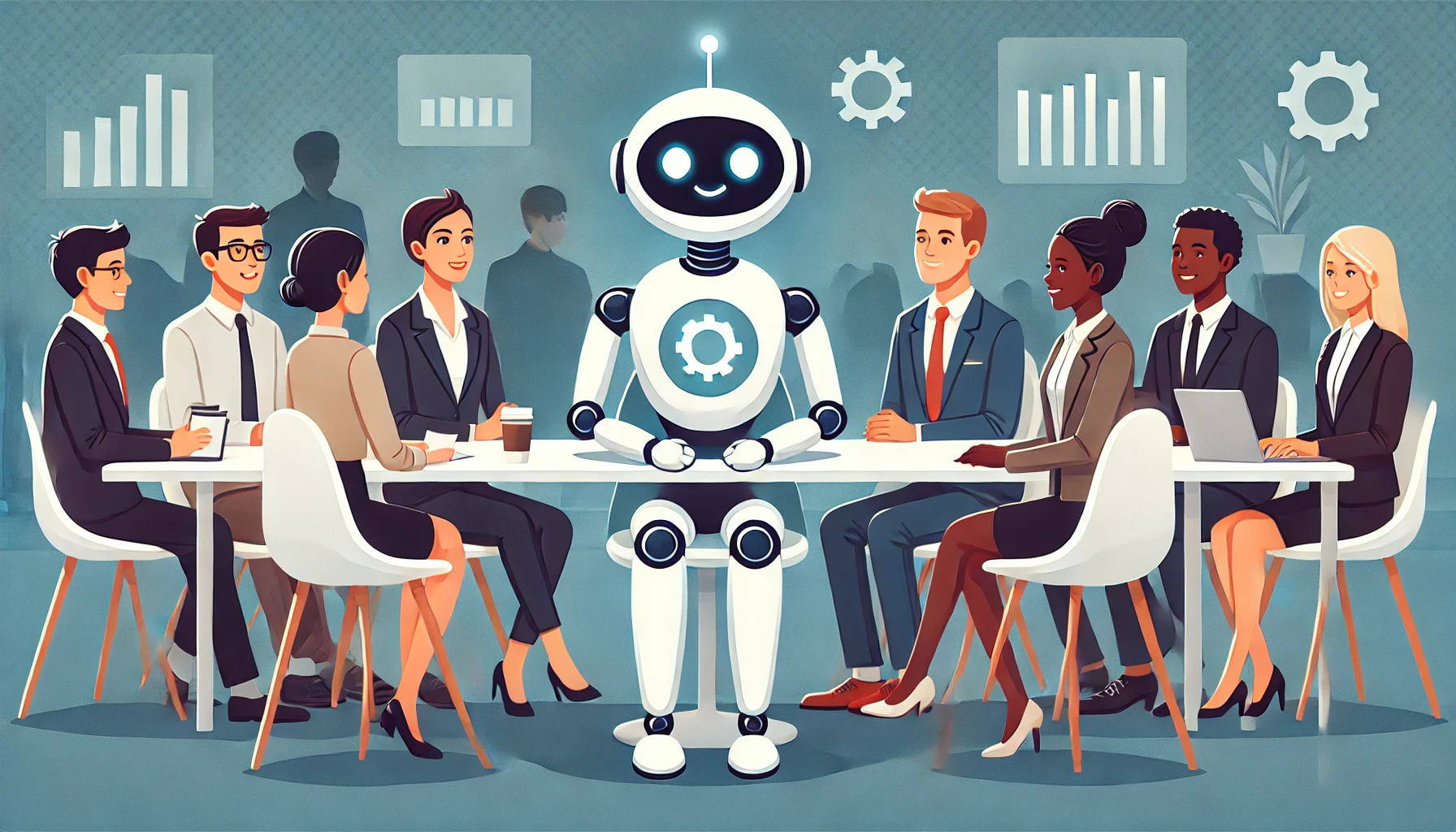
AI Hiring in 2026: What Recruiters Need to Know About Privacy, Transparency and Human Oversight
AI has moved from recruitment experiment to working infrastructure.
Resume parsing, candidate matching, automated assessments, interview analysis and ranking systems can now handle parts of the hiring process that previously required hours of manual work.
But there is a problem with treating AI hiring as purely a productivity upgrade.
Hiring decisions affect people. The more of the decision process that becomes automated, the more important it becomes to know what data is being used, how outputs are generated and where a human remains responsible.
For employers building or buying AI-enabled recruitment systems in 2026, privacy, transparency and human oversight are no longer topics to leave until after deployment.
1. Recruitment data is more than a resume
A modern hiring platform can process considerably more than a candidate’s CV.
Depending on the workflow, an employer may handle application information, assessment responses, interview recordings, transcripts, identity information, behavioural signals and evaluation results.
India’s Digital Personal Data Protection Rules, 2025 were notified by MeitY in November 2025, with different provisions taking effect on a phased timeline.
That makes data governance an operational consideration for recruitment teams.
Before introducing another hiring tool, employers should be able to answer:
What candidate data does the system collect?
Why is each category of data required?
How long is it retained?
Who can access it?
Where is it stored?
Which vendors or systems receive it?
How is it deleted or handled when it is no longer required?
The important shift is simple: candidate data should be treated as part of the hiring infrastructure, not as incidental information sitting inside an ATS.
2. AI output should support a hiring decision, not become the hiring decision
There is a major difference between using AI to organise evidence and allowing an automated system to determine someone’s employment outcome.
For example, an AI system might identify relevant skills from a resume, compare those skills with a job description, generate interview questions or summarise an interview.
Those outputs can help a recruiter work faster.
But the recruiter still needs enough context to understand why the system produced that output and whether it should be acted upon.
This is particularly important in the EU. The AI Act classifies certain AI systems used for recruitment and candidate evaluation as high-risk, while its framework includes requirements around risk management, transparency, human oversight, documentation, accuracy and robustness.
As of 2026, the EU’s implementation timeline has also been evolving. The Commission currently states that the rules for high-risk systems in areas including employment are scheduled to apply from 2 December 2027, following the 2026 AI Omnibus changes.
For global employers, that makes one principle increasingly useful:
Don’t build hiring workflows where nobody can explain the decision because “the AI said so.”
3. Structured evidence is more useful than another score
One of the easiest mistakes in AI recruitment is assuming that adding a score automatically makes hiring more objective.
It doesn’t.
A candidate receiving 82 instead of 76 tells a recruiter very little unless the system can show what contributed to that result.
A stronger recruitment workflow connects the score to evidence:
Requirement → Evidence → Evaluation → Human decision
For example:
Required skill: PythonResume evidence: 4 years of Python developmentAssessment evidence: demonstrated competency in Python problem solvingInterview evidence: explained system design and debugging decisionsRecruiter decision: proceed
This creates a much more useful hiring record than a single unexplained percentage.
It also gives recruiters something they can challenge.
4. Human oversight should happen throughout the process
Human oversight does not mean simply putting a recruiter at the end of an automated pipeline and asking them to click “approve.”
Good oversight happens at multiple points.
Before evaluation:Is the job requirement itself clear and relevant?
During evaluation:Is the candidate being assessed against the right criteria?
After evaluation:Does the evidence support the system’s recommendation?
Before rejection:Is there anything unusual, incomplete or contradictory that requires human review?
This approach also aligns with broader AI risk-management guidance. NIST’s AI Risk Management Framework emphasises trustworthy AI characteristics including validity, reliability, transparency, explainability, privacy and management of harmful bias.
The objective isn’t to remove humans from hiring.
It is to give humans better evidence to work with.
5. Verification matters more as AI makes applications easier to produce
There is another change recruiters need to account for.
Candidates can now use AI to improve resumes, prepare interview answers and practise assessments.
That is not inherently a problem. Candidates have always used tools to improve how they present themselves.
The recruitment challenge is different:
How much of what the employer sees represents actual capability?
This is where evaluation needs to move beyond the resume.
A candidate’s application can establish what they claim.
An assessment can establish what they can demonstrate under defined conditions.
An interview can establish how they explain, reason and communicate.
A strong hiring system connects these signals instead of treating each one as an isolated step.
6. The next generation of hiring platforms will connect the evidence
The direction of recruitment technology is therefore not simply “more AI.”
It is more connected evidence.
A modern hiring workflow can combine:
Structured resume data
Job and skill requirements
Candidate-job matching
Screening responses
Verified assessment performance
Interview feedback
Interview transcripts and key moments
Integrity and identity signals
Recruiter evaluation
The value comes from connecting those signals.
That is the approach VHire is built around.
A candidate can move from application and resume parsing into AI screening, proctored assessment and live interview, with each stage contributing evidence to the next. Instead of making every hiring decision from a resume and an interviewer’s memory, the process creates a progressively richer candidate profile.
What recruiters should ask before adopting an AI hiring platform
Before buying another point solution, ask five questions:
1. What exactly is being automated?Screening, matching, assessment, interviewing and decision support have different risks.
2. What evidence sits behind every recommendation?A score without context is difficult to challenge or trust.
3. What candidate data is being collected?The more data involved, the more important governance becomes.
4. Where does the human remain accountable?Define the points where recruiters review, challenge and approve outcomes.
5. Can the entire hiring journey be understood as one workflow?If resume screening, assessment and interviewing exist in separate systems with no shared context, recruiters still have to reconstruct the candidate manually.
The real standard for AI-assisted hiring
The goal shouldn’t be to make hiring decisions without humans.
It should be to make human decisions faster, more consistent and better supported by evidence.
That means using AI where it removes repetitive work, verification where claims need to be tested, and human judgement where context still matters.
In 2026, the strongest recruitment technology isn’t simply the platform that automates the most.
It is the one that can show recruiters what happened, why it matters and where they still need to make the call.Hiring is changing quickly, and staying informed matters just as much as building better processes. Explore current opportunities on our Jobs page or discover more hiring insights on our Blogs Page!